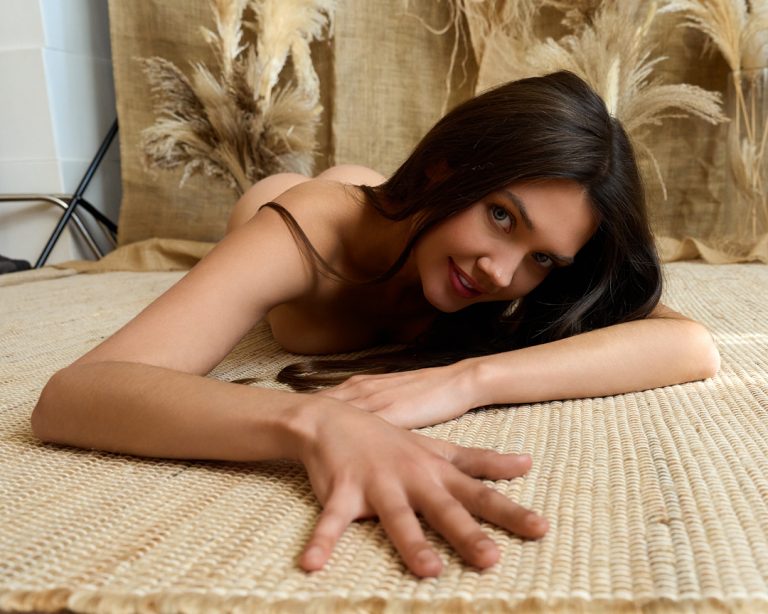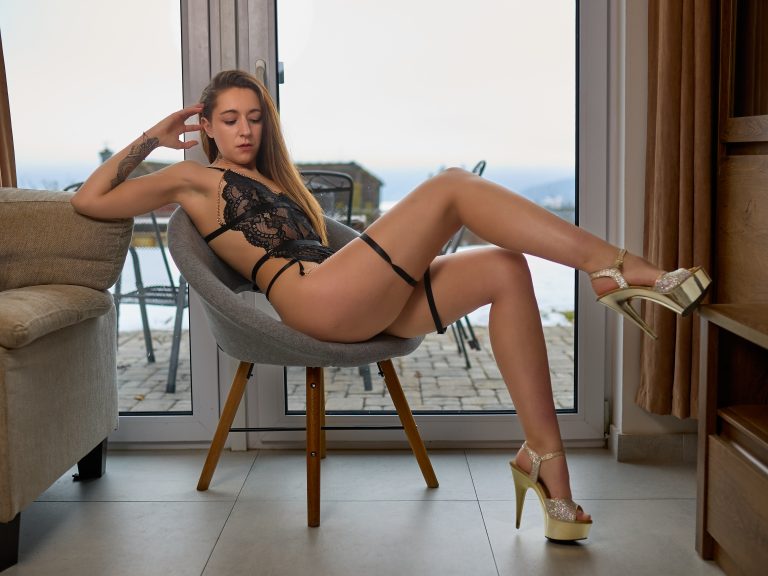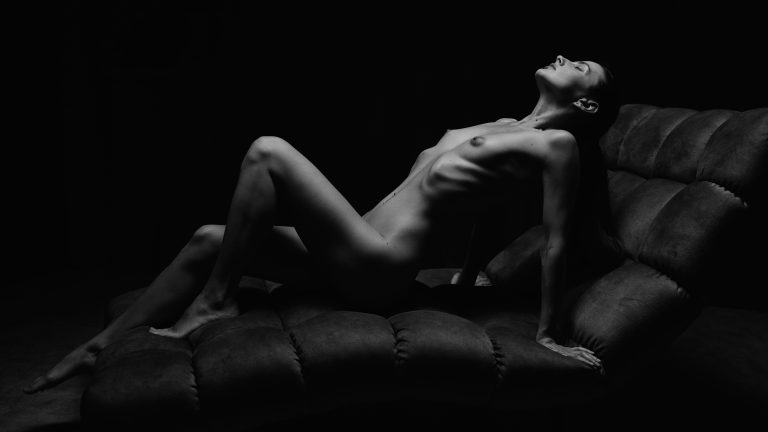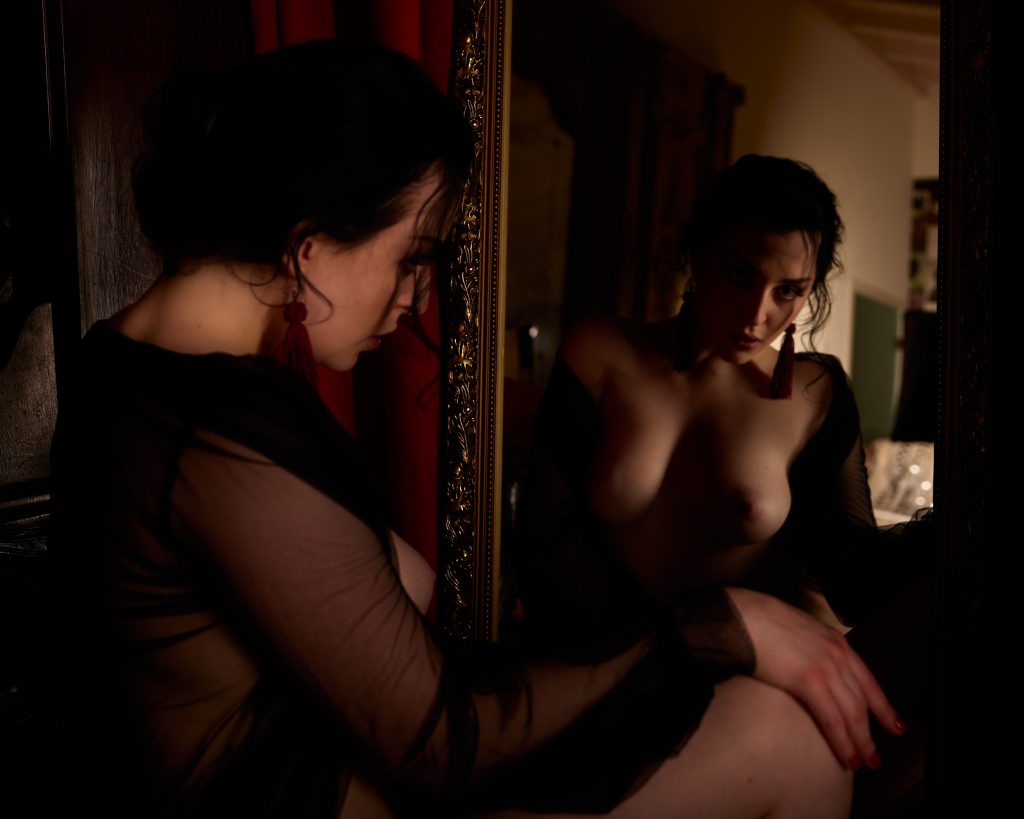
I’m sometimes asked whether boudoir photography is actually still relevant today. Lingerie, sheets, soft lighting – doesn’t that sound like a stereotype of women that we’ve long since wanted to leave behind? Of a woman who is expected, above all, to be pretty and seductive – ideally for someone else’s benefit?
I think that’s a valid question. And I’d like to answer it honestly.
The criticism is not unfounded
Anyone who looks into the history of sensual photography will soon notice a pattern: for a long time, women were photographed – but they had little say in the matter. Men stood behind the camera, men decided on the poses and framing, and the pictures were mostly taken for a male gaze. Women were subjects, not co-creators.
Early boudoir photography was often conceived in the same way: as a surprise for one’s partner, as a wedding present, or as an album ‘for him’.
If ‘Boudoir’ still worked like that today, the critics would be right. But the genre has changed. And it has changed precisely in the one respect that really matters.
What defines a modern image of women
For me, a modern view of women has nothing to do with whether a woman wears lingerie or a trouser suit, or whether she chooses to present herself in a sensual way or not. It has to do with who makes the decisions.
A modern woman doesn’t have to please anyone. She can be strong and gentle. She can pursue a career, bring up children, do both, or neither. She can find herself sexy without having to justify it – and she’s just as free not to.
This is precisely where the boudoir and a modern image of womanhood converge: in self-determination.
Who the picture is for
The biggest change in boudoir photography in recent years is the question of who the photos are for. In the past, the answer was often: for one’s partner. Today, there are usually very different reasons behind it:
- to see yourself for once the way you feel,
- treat yourself to something after a difficult time,
- celebrating a milestone birthday and realising that you’re more beautiful at 50 than you were at 30,
- to come to terms with one’s own body.
These reasons have one thing in common: the woman is the focus. It is not someone else’s perspective, but her own. Whether she shows the pictures to anyone later is up to her – often she simply keeps them to herself.
Sensuality is not a weakness
There have been times when women might have felt they had to choose between ‘being taken seriously’ and ‘being sensual’. As if femininity were a risk to competence.
I regularly see the opposite happening in the studio. Women who hold positions of responsibility at work, lead teams, keep their families together – and who, in front of the camera, discover that they’re allowed to have a gentle, playful or seductive side too. One thing doesn’t take anything away from the other. On the contrary: many leave the shoot with a sense of self-confidence that they carry with them into their everyday lives.
Sensuality is not the opposite of strength. It is part of it.
Real bodies rather than ideals
A modern view of women also means putting an end to the idea of a single ‘ideal’ body. No woman should have to lose weight, have smoother skin or look younger in order to feel beautiful.
This is particularly evident in boudoir photography. I photograph women of all ages and body types, with scars, stretch marks and laugh lines. I retouch my photos with care: I remove what is temporary, but I do not alter body shapes. A woman should be able to recognise herself in her photos – not an idealised version that never existed.
Self-determination is not just a buzzword, but a process
‘Self-determined’ sounds nice, but it can quickly become a cliché. That’s why it’s important to me that, in my case, it’s applied in a very practical way:
- You decide how far you want to go – before, during and after the shoot. No means no, and you don’t need to give a reason.
- You decide on your outfits and style. Whether it’s lace, an oversized shirt, a blazer or a sheet: there are no rules.
- You decide which photos to keep. You can choose from your private gallery.
- You decide who sees the photos. No photo will be published without your express, written consent.
It is these rules alone that transform a sensual photograph into one that is self-determined.
And a man behind the camera?
I know that this particular question is on everyone’s mind. Can a man take boudoir photographs without repeating old patterns?
I think so – but only if he understands his role properly. I’m not the one who decides how a woman should look. I’m the one who sets up the lighting, suggests poses and creates a safe environment. She makes the decisions. I don’t touch anyone, I explain every pose beforehand, and if she wishes, my wife can be present throughout the shoot.
Perhaps that is even part of the modern picture: men who do not dictate to women, but listen to them.
My conclusion
Boudoir can be old-fashioned – if it’s just about pleasing the gaze of a stranger. But it can also be one of the most modern things a woman can do for herself: carving out a space for herself, presenting herself as she wishes, whilst remaining in control at all times.
For me, boudoir is exactly that. It’s not about asking, ‘How do I look to others?’, but ‘How do I want to see myself?’
How would you present yourself?
If you fancy finding the answer to this question for yourself, let’s have a chat. There’s no obligation – we can meet for a coffee at the studio or talk on the phone – and there are absolutely no expectations about how far you ‘should’ go.