
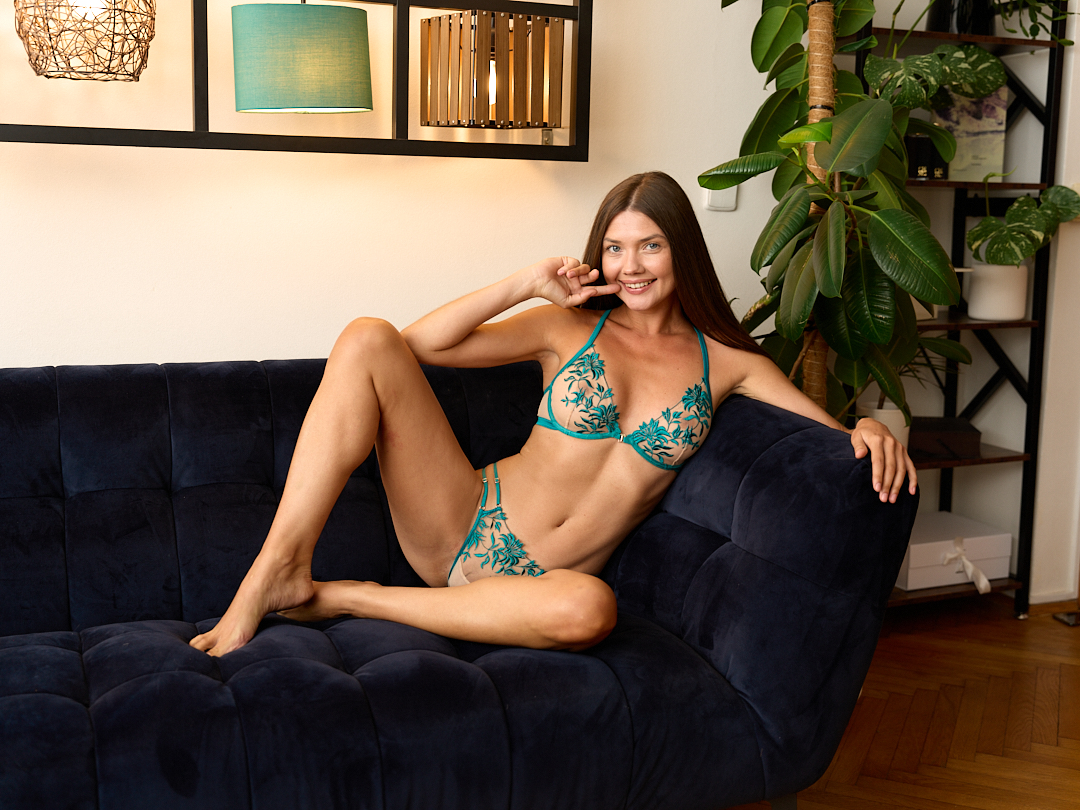
If anyone asks me what the most important thing about a boudoir photograph is, I answer without hesitation: the light.
It’s not the camera, not the outfit, not even the pose. Light determines whether skin looks soft or harsh, whether a body appears to flow or looks flat, whether a picture is calm and intimate or garish and loud. That’s why, before every shoot, I spend a lot of time setting up the lighting exactly as it suits you.
In this article, I’ll take you behind the scenes. No technical jargon – I promise.
Why you look different in the mirror than you do in my photos
The light in the bathroom usually comes from above: a ceiling light or a mirror cabinet. This light casts shadows under the eyes, highlights every imperfection in the skin and makes curves appear flat. No wonder so many women see themselves more critically in the morning than they really are.
It’s different in the studio. Here, I can shape the light: how bright it is, the direction it comes from, how softly it falls, and where the shadows fall. And it is precisely these four things that make all the difference.
The four basic rules for flattering lighting
1. Big and close means soft
The larger a light source is in relation to you, the softer the light becomes. A small, bare bulb casts harsh shadows with sharp edges. A large softbox placed close to you, on the other hand, envelops you gently – shadows fade softly, and skin looks smooth and natural without me having to retouch it much.
That’s why, in the boudoir, I usually work with large light modifiers, which I position close to you. The result looks like the most beautiful light coming through a window in the late afternoon – except that it doesn’t change when a cloud drifts past.
2. Direction shapes the body
Light from the front flattens. Light from the side sculpts. When the light falls on you at a slight angle, it creates gentle transitions between light and dark areas – and it is precisely these transitions that reveal the contours of your body: the curve of your hips, your shoulders, your back.
For the face and upper body, I usually position the light slightly higher up and at an angle in front of you. That’s the direction from which we perceive light as being particularly natural and flattering.
3. Shadows are not enemies
Many people think that good lighting must illuminate everything evenly. In boudoir photography, the opposite is often true: shadows create depth, tension and intimacy. They leave room for the imagination and draw the eye to where it should be.
It’s perfectly fine for part of your body to fade into the darkness. This doesn’t make you look hidden, but rather elegant – and for photographs in the genre of concealed nude or partial nude, it is the most important compositional tool of all.
4. The highlight separates you from the background
A second, narrow beam of light coming from diagonally behind creates a delicate, bright halo around your shoulders, hair or back. This halo sets you apart from the dark background, emphasises your contours and creates that subtle sheen you see in magazines.
Three lighting effects that I particularly love
The light from the window: soft, warm, natural
A large light source to one side, perhaps with a light-coloured surface on the other side to reflect some of the light back. This creates an open, soft light reminiscent of a peaceful afternoon in the bedroom.
Ideal for: lingerie, an oversized shirt, photos in bed, moments when you’re laughing or simply relaxing. I usually start most shoots with this lighting – it’s the most welcoming way to begin.
Low-key: dark, dramatic, timeless
A black background, a single, carefully shaped beam of light, plenty of shadow. Only what I deliberately illuminate becomes visible. The body becomes a sculpture; the image, a graphic composition of light and darkness.
Ideal for: concealed nudes, semi-nudes, nudes, shots from behind, and anyone looking for a touch of mystery. This is often where the pictures are taken that later end up hanging on the wall in large format.
Backlighting and contours: light and ethereal
The main light comes from behind or at an angle from behind; from the front, there is only a gentle glow. The outlines of your body glow, your hair and clothes shimmer; everything looks light and a little dreamlike.
Ideal for: flowing fabrics, lace, silhouettes and images with a romantic, almost ethereal quality.
Lighting to suit you
There’s no such thing as the ‘right’ lighting for everyone. There’s only the right lighting for you and for the atmosphere you’re aiming for. That’s why I keep adjusting the lighting throughout the shoot:
- Based on the shape of your face, I’ll choose a style that flatters your features best.
- I use light and shadow on your body to make your lines flow.
- Soft lighting ensures that your skin looks natural and radiant – without me having to do much retouching.
- To suit your preferences, we’ll switch between light and dark, soft and dramatic, depending on what you like.
And because the studio doesn’t have any windows facing the street, I’m completely unaffected by the weather or the time of day. The light is just as lovely on a dull November afternoon as it is in the height of summer.
How you’ll notice it
To be honest: almost nothing. And that’s exactly how it should be.
You’ll see a few large light modifiers; every now and then I’ll move a light or ask you to turn your chin a little. A brief flash that doesn’t dazzle anyone. That’s all. All the technical equipment works in the background so that you can concentrate on yourself.
What you do notice, though, is that when I show you the first pictures on the screen, many women see themselves for the first time in a light that flatters them rather than criticising them. And that moment is the most wonderful one for me, time and time again.
Fancy seeing yourself in a new light?
If you’re curious to see how the lighting in the studio works for you, do pop round for a coffee. I’ll show you the different lighting set-ups, and you can decide which one appeals to you – with no obligation.
Real. Sensual. Unapologetically You.
Arrange a no-obligation initial consultation · Get to know the studio · View packages & book appointments